Stop wasting money on average branding. How our data obsession is optimising everything to nothing
Walk any big-city street and you’ll feel it: All the coffee shops look like the same Pinterest board. Towers of anonymous glass crowd the skyline. Cars have the same silhouettes and details. Big brand expression is more a compliance exercise than a creative one.
Why? Research.
Somewhere in a boardroom,from London to Hong Kong, focus groups just nodded at the safest option while the data dashboard shaved off the last sharp edge. The deck goes back to the agency with the brief: Optimise to nothing by dulling down or killing distinction. Another little piece of a creative’s soul dies.
Insight used to provoke. Real anecdotes, rough edges, “why not?” questions. It was fuel for briefs that sparked fresh thinking. Today, research is wielded after the creative process, a scalpel to dissect originality in a virtual postmortem of ideas.
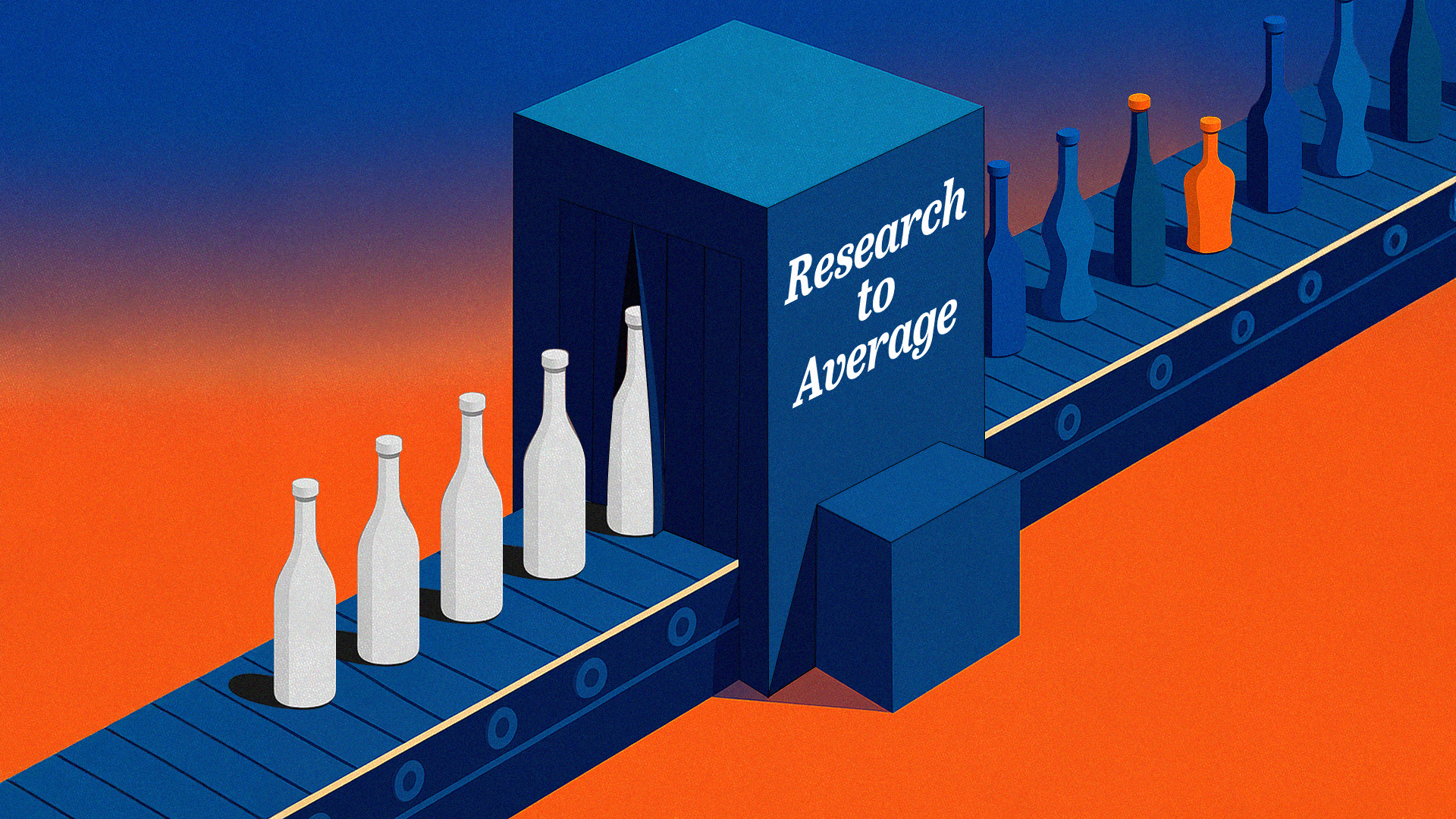
The very tools we built to understand audiences, focus groups, A/B testing, and AI systems have turned insight into a censor, not a catalyst. We know attention spans are short and distinction is the ultimate competitive advantage. Yet we’re destroying it, slicing away anomaly until only the statistically average survives.
The paradox is stark: the more we optimise for what people say they want, the more we deliver what nobody needs,forgettable experiences that disappear into noise.
Focus Groups Are a Fallacy
Walk into any focus group facility and witness consensus in action. Twenty strangers, recruited to represent “target demographics,” naturally gravitate toward the least offensive, most familiar options.
They’re not thinking about what they see. They’re thinking about what others in the room see. And what those others think about what they think.
A focus group is a hothouse of echoed opinions and tentative “I agrees”, because humans seek safety in numbers, even when those numbers are artificially assembled in a conference room.
Remember: these participants are products of an echo chamber. Whatever their demographic, those turning up have been shaped by algorithmic sameness. For their brains, familiarity is a dopamine-rich safe space of confirmation bias. Their taste has become institutionalised, not instinctive, because platforms don’t profit from disrupting the endless scroll with something genuinely challenging.
The evidence is everywhere. Spotify’s recommendation engine doesn’t just suggest what you might like, it shapes what artists create. Musicians now craft songs to fit algorithmic preferences with digestible melodies that thrive on playlists. YouTube rewards whatever keeps people watching. TikTok demands familiar patterns. Instagram’s feed has trained brands to chase identical filters and compositions.
Even AI acceleration has dumbed down innovation. What many perceive as groundbreaking creativity is sophisticated paint-by-numbers, echoing what already exists rather than imagining what could be. The real danger isn’t AI replacing human creativity, but its acceleration of sameness. Consumers are being trained to expect algorithmic averages, not the unusual or progressive.
If everyone’s world floods with AI-generated content, and future AI trains on that material, we risk perpetual averaging, leaving no appetite for the genuinely useful, progressive, or desirable.
Those platforms that promised to democratise creativity? They’ve commodified conformity. It’s seeping onto supermarket shelves, screens, and brand ecosystems worldwide.
When brands base creative decisions on focus groups, they’re following reactions from minds trained toward the familiar. This expensive “insight” reveals only comfort zones,not instinctive joys, passions, or real opinions. The resulting data traps brands in a feedback loop of mediocrity.
Research tells you what people liked before, not what bold idea they might love next. They’ll stick with safe, until a progressive brand launches the remarkable idea waiting in the wings, ready to stab your heavily researched “stability” in the back.
Why the Research Obsession?
The commercial logic seems sound: nobody gets fired for decisions backed by customer insights. The pull toward average is driven by powerful incentives. In the algorithm age, standing out feels risky. Global companies want creative solutions that travel across cultures without friction. Homogeneity is easy. Safe.
Creative experimentation is expensive and uncertain, while testing iterations or copying proven formulas offers “predictable” returns. Fast-fashion retailers reproduce runway styles that generate social buzz rather than invest in original designs. Tech startups stick to tried UX patterns. Packaging becomes a collage of established category codes.
Platform algorithms create additional incentives for visual conformity. The very systems designed to help brands stand out now reward fitting in.
The Blanding Epidemic
The result? “Blanding”, distinctive identities forced into interchangeable minimalism.
The formula is depressingly predictable: Sans-serif typeface. Clean and readable. Direct tone. Maybe cheerful illustrations, people like those. Vibrant colours. Bonus points for purple and turquoise.
Global skylines look algorithm-generated rather than imagination-born. Digital interfaces surrender to sameness. Every app follows identical UX patterns, hamburger menus, infinite scrolls, and matching gesture languages. When one gets A/B tested to optimal engagement, competitors quickly copy.
But Bravery Makes Business Sense
You learned this at marketing school. Coca-Cola’s script logo, Nike’s swoosh, the London Underground’s roundel became iconic precisely because they didn’t follow crowds. Born from creative vision rather than iterative testing, they’ve lasted across decades.
Distinctive brand cues can increase brand salience by 52% and “more than double future growth prospects,” according to Kantar studies. Yet companies ignore this research, choosing sameness over proven distinctiveness.
The lesson is clear: being distinctive isn’t just creatively galvanising,it’s commercially essential.
Remember when we didn’t know computers could come in colours? Or vacuum cleaners could be purple and yellow? Groundbreaking creativity and commercial success come from courage to build something so remarkable it can’t be confused with anything else.
During this period of fear and instability, can we step away from spreadsheet safety nets and back toward the spark?
Steve Jobs eschewed market research entirely: “It’s not the consumers’ job to know what they want.” He launched the colourful iMac when the industry had converged on beige boxes,a creative risk that became a massive hit and redefined computer design.
If we want true success and wish to protect creativity’s transformative, problem-solving power, it’s time to reject the research codes. And have some fun creating new ones.
All brands need to be found, understood, lived, and loved, and who loves average?
Next week: How to overcome the blandness and gain fresh confidence away from the data-sphere. It’s time to take steps toward distinction,or face extinction.